
Diagnostic Care
When your pet is sick or injured, they can't tell us what is wrong.
A thorough physical exam along with a history and information of symtoms that you, as your pets guardian, have noticed at home , are the first important steps. If the diagnosis is not immediately evident during innitial assesment, your veterinarian will recommend specific diagnostic tests .
USG
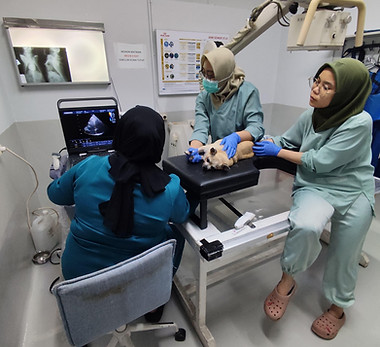
This is a Paragraph. Click on "Edit Text" or double click on the text box to edit the content and make sure to add any relevant information that you want to share with your visitors.
X - RAY

Imaging such as x-rays and ultra sound, which allow diagnosis of conditions of the heart and lungs, gastrointestinal obstructions, tumors or the internal organs or bones, fluid in the chest or abnormal cavity, urinary stones or gallstones, reproductive diseases, and bone/joint disorders. For most patients, gentle restraint can be used for these procedures, however, in some cases sedation may be needed.
Laboratorium

This is a Paragraph. Click on "Edit Text" or double click on the text box to edit the content and make sure to add any relevant information that you want to share with your visitors.
Microscopy

-Microscopy is quite useful in the evaluation of lab samples such as ear swaps, skin impressions and scrapes. These diagnosis are helpful in the diagnosis of dermatologic ant otic ( ear ) conditions.
Service Name
Describe your service here. What makes it great? Use short catchy text to tell people what you offer, and the benefits they will receive. A great description gets readers in the mood, and makes them more likely to go ahead and book.

2
Service Name
3